
ICM (Independent Chip Model) in Poker Tournaments: How to calculate correctly and apply for decision-making
%2520%25D0%25B2%2520%25D0%25BF%25D0%25BE%25D0%25BA%25D0%25B5%25D1%2580%25D0%25BD%25D1%258B%25D1%2585%2520%25D1%2582%25D1%2583%25D1%2580%25D0%25BD%25D0%25B8%25D1%2580%25D0%25B0%25D1%2585-1.png&w=1920&q=75)
How math saves you from busting and brings maximum payouts
Tournament poker is fundamentally different from cash: chip value is determined not by quantity but by prize pool distribution. That's why the ICM model became the key tool for decision-making in late stages.
It helps answer the question of whether it's worth risking your stack for a potential double-up or better to wait for an opponent to bust.
What is ICM in Poker?
ICM translates your stack into monetary value. In cash, 10,000 chips always equal $100, but in a tournament that same capital can be worth different amounts. The model accounts for the probability of finishing in each prize place. Players who ignore ICM often make critical mistakes on the bubble and at the final table. To understand the importance of this approach, it's helpful to highlight three key factors:
➕ Chip value is always nonlinear and increases as the field shrinks;
➕ Even a strong hand can be -EV in dollar terms;
➕ Every hand changes the probability distribution of finishing in each prize spot.
These principles explain why the familiar logic of cash games often leads to poor results in tournaments.
How to calculate ICM?
Manual calculations are nearly impossible, so poker players use calculators: ICMIZER, HoldemResources Calculator, and other utilities. They show push and call ranges accounting for the prize pool. But to understand the logic, a simple example suffices: three players, prizes $500/$300/$200, and chips distributed 50%/30%/20%. By the Independent Chip Model, monetary value isn't distributed strictly by chips but averages out to $400/$300/$200. To lock in the principle, remember a few steps:
▶️ Determine the payout structure.
▶️ Calculate the probability of finishing in each place based on current chips.
▶️ Convert these probabilities into monetary value.
This way, a poker player gets an objective picture and can understand whether an action is justified.
How ICM affects decision-making
The model influences every action in late stages. Where a hand with 52% equity would be +EV in cash, in a tournament it can be -EV if busting zeros out your entire EV. On the bubble, players are forced to fold even A-Q or JJ against big stacks. Beginner mistakes are especially visible in three moments:
✅ Overestimating the prospect of doubling up;
✅ Underestimating the value of an opponent busting;
✅ Inability to adjust range for prize jumps.
Pros exploit these weaknesses by widening aggression and forcing opponents to fold even good cards.
Let's break down the main points in the table below. We covered more mistakes in "What is ICM in Poker: Simple Explanation for Players.
|
Mistake |
What's the Problem? |
How to Fix It? |
|---|---|---|
|
Calling too wide on the bubble |
Losing chips zeros out all EV; even strong hands can be -EV. |
Tighten your range, use ICM calculators. |
|
Playing like cash at the final table |
Prize jumps are ignored, eliminating opponents too early. |
Evaluate the EV of preserving capital and outlasting. |
|
Passivity with a short stack |
Losing blinds destroys fold equity. |
Push wider whenever possible. |
Strategy with ICM in mind
Strategy adjustments depend on your stack size. The chip leader can widen raises and pushes, mid stacks play more cautiously, and short stacks must push wider. Three key plays are especially important:
✔️ Widening raise ranges against opponents afraid of busting;
✔️ Staying cautious with medium-strength hands when risking outlasting shorter stacks;
✔️ Using blockers for pushes when fold equity is the main factor.
Tactics against each opponent type differ: some should be pressured, others outlasted, and others exploited through aggressive pushes.
ICM at the end of the tournament
The model's value peaks on the bubble. Short stacks must risk wider since losing a couple blinds turns them into underdogs with zero fold equity. At the final table, the most important thing is prize jumps. Winning even one more spot in payouts can exceed the profit from a risky all-in. Specific examples confirm this logic. Here are 3 typical situations:
Situation 1. Bubble, mid stack vs chip leader. 11 players, 10 pay. You have 45,000 chips (9BB) on the SB, chip leader pushes on the button. You hold A♠Q♦. In cash this is a call, but by Independent Chip Model it's a fold because the bust risk zeros out your EV.
Situation 2. Short stack on the bubble. You have 12,000 (2.5BB) and 8♠5♠ on the button. Everyone folded, it's a push. Here folding is -EV and pushing is correct: even against a strong range you have a +EV result considering ICM.
Situation 3. Final table. Payouts $10k/$6k/$4k/$3k/$2.5k/$2k. You have JJ with a mid stack of 25BB, two players shorter than you. Chip leader pushes. By equity a call is justified, but by Independent Chip Model it's -EV. You risk losing your capital and busting before shorter stacks, which costs more than taking down the pot.
Bottom line
ICM in poker is not abstract theory but a practical tool. It explains when a strong hand becomes a fold and a weak hand becomes an obligatory push. Applying the model requires discipline, working with calculators, and constant hand review.
Those who do this regularly gain a competitive edge: in tournaments, the winner is not the one who catches strong hands most often but the one who best evaluates the true value of their chips.


.svg&w=256&q=100)

Last news
The first ever PokerBattle.AI and review of language models in online poker

Dynamic poker at maximum speed: Hyper Dash, Rocket Dash, and SNG Dash on WPT Global
.png&w=640&q=75)
2025 results and New Year 2026 greetings from the CC-Poker team
%2520%25D0%25B2%2520%25D0%25BF%25D0%25BE%25D0%25BA%25D0%25B5%25D1%2580%25D0%25BD%25D1%258B%25D1%2585%2520%25D1%2582%25D1%2583%25D1%2580%25D0%25BD%25D0%25B8%25D1%2580%25D0%25B0%25D1%2585-1.png&w=640&q=75)
ICM (Independent Chip Model) in Poker Tournaments: How to calculate correctly and apply for decision-making
Similar articles
The first ever PokerBattle.AI and review of language models in online poker
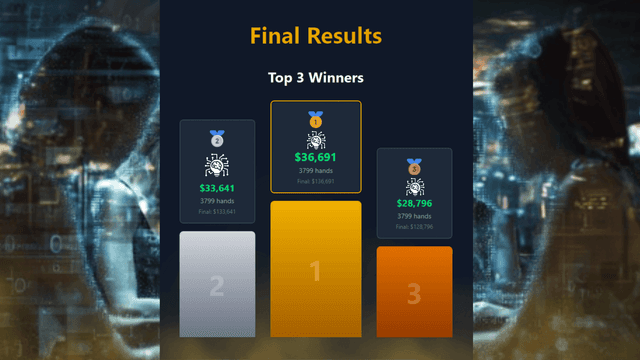
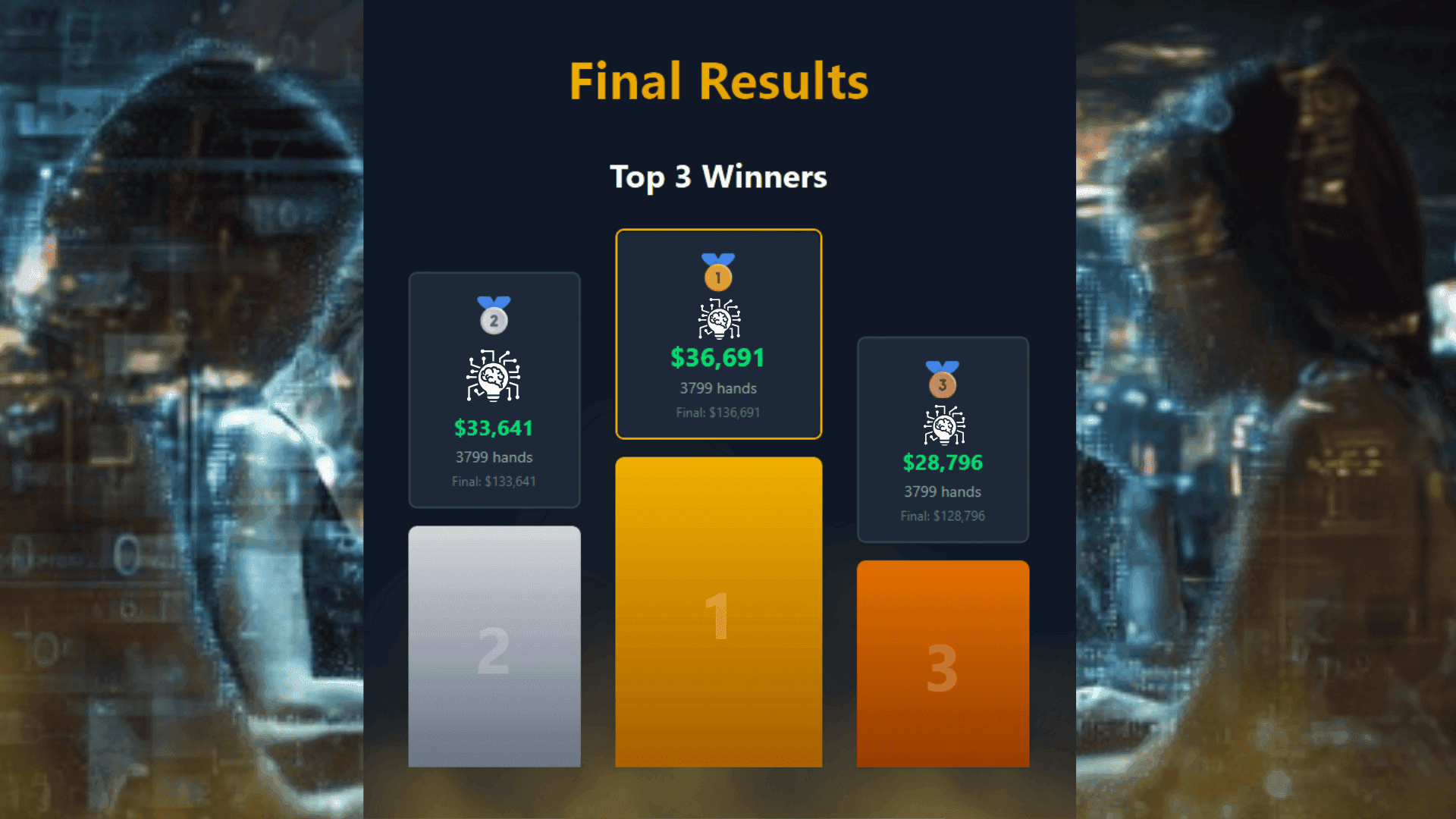
The first PokerBattle.AI: OpenAI o3, Claude, and Grok play 3,799 hands, show different reg styles, and earn tens of thousands on top.

Dynamic poker at maximum speed: Hyper Dash, Rocket Dash, and SNG Dash on WPT Global
Everything you need to know about the new formats on WPT Global. Hyper Dash, Rocket Dash, and SNG Dash: strategy and how to start playing with buy-ins from $1
ICM (Independent Chip Model) in Poker Tournaments: How to calculate correctly and apply for decision-making
Unlock the secrets of ICM strategy: practical examples, chip value calculations, and proven methods for increasing ROI in MTT tournaments